
Home › Decatur, TX › Fire & Smoke Damage
★ DECATUR & WISE COUNTY · 24/7
Fire & Smoke Damage Restoration in Decatur, TX
Plaster holds smoke odor longer than drywall. It's also worth saving.
Older Decatur construction gives smoke more places to go and more reason to stay: porous plaster, unsealed old-growth framing, lath cavities, and original millwork that can't be replaced in kind. The right approach is slower and preserves more, and it starts with identifying the residue rather than reaching for a sponge.
Reviewed by the Best Option Restoration of Denton field team
IICRC-certified: WRT · FSRT · AMRT
🗓 Reviewed and updated September 2026
QUICK ANSWER
Best Option Restoration of Denton provides 24/7 fire and smoke damage restoration in Decatur, TX and Wise County: emergency board-up, soot removal matched to the residue type, contents pack-out, and odor treatment. On older construction, plaster and unsealed framing absorb odor compounds deeply, so treatment focuses on the source material rather than surface cleaning. Don't wipe soot; pressure and water bond it permanently. Call (469) 440-2887.
AT A GLANCE
Response On site in ~45 min
First priority Board-up & secure
Residue types Dry · wet · protein
Contents Inventoried & tracked
Phone (469) 440-2887
What Decatur homeowners should know about fire damage
- Don't wipe soot. It's chemically active, and pressure plus water bonds it into plaster and paint permanently, a cleanable surface becomes a replacement.
- Original millwork, doors, and hardware are usually restorable and can't be replaced in kind. Say what matters to you before demolition decisions get made.
- Plaster and unsealed old-growth framing absorb odor compounds deeply, which is why odor returns on humid days if only the surfaces were cleaned.
- Older homes frequently trigger code upgrades during rebuild. That's often a separate ordinance-and-law sublimit worth checking before design.
WHAT WE DO
Secure it, document it, then clean according to the residue
That first visit has nothing to do with cleaning. What matters is sealing the building, capturing the extent while it remains visible, and stabilizing conditions so nothing worsens, soot is acidic, and metals and electronics degrade within days.
Identifying the residue comes next. What burned determines the soot, and the soot determines the method: dry sponge and HEPA vacuum on dry soot, solvents on wet soot from smoldering plastics, full degreasing and enzyme treatment on protein residue from a cooking fire.
On older construction the odor work is where jobs succeed or fail. Plaster, lath cavities, and unsealed framing hold odor compounds and release them when humidity rises, so treatment has to reach the material rather than the surface: thermal fogging, hydroxyl treatment, and sealing where replacement isn't an option.
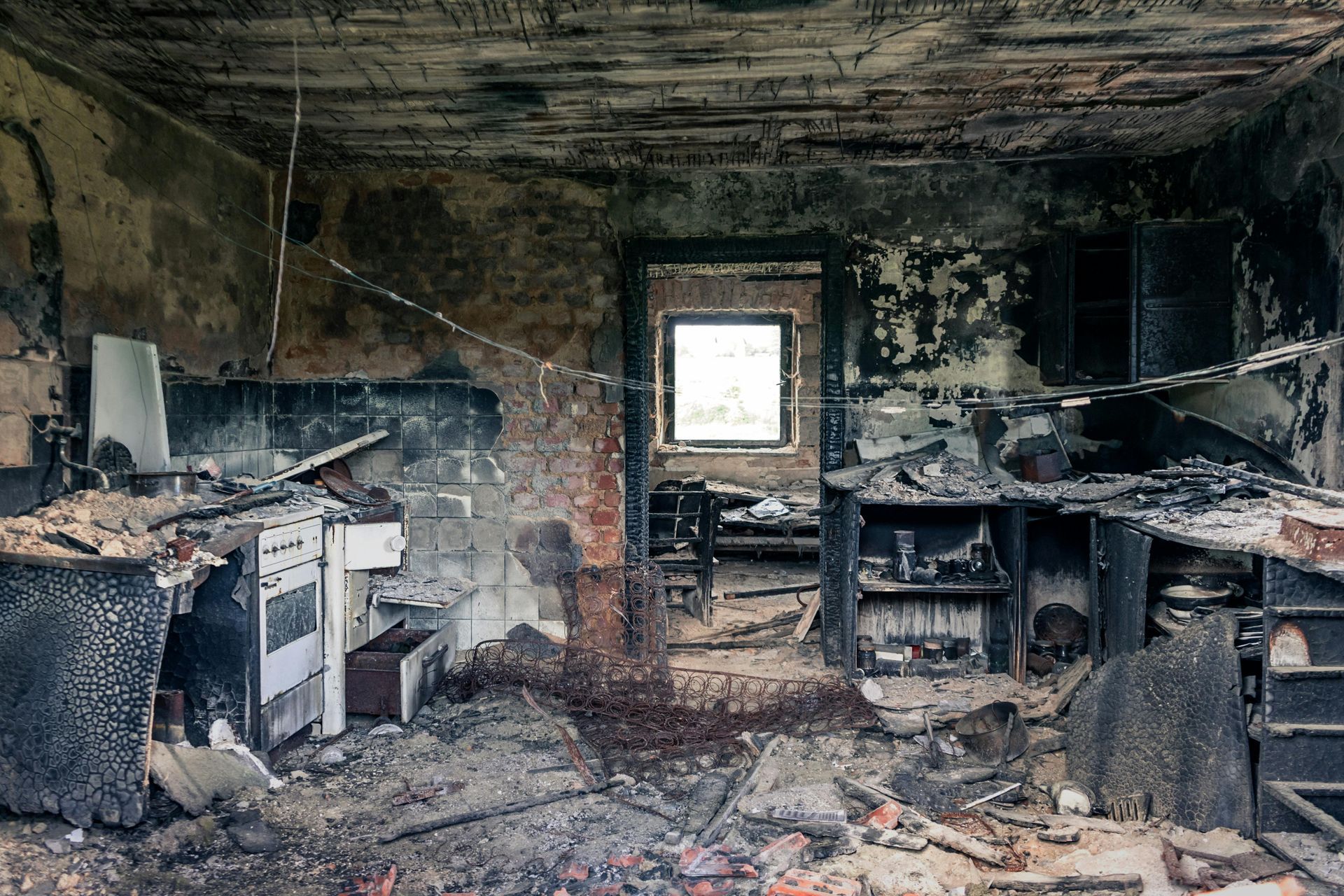
RESIDUE TYPES
What are the three types of soot, and how is each cleaned?
A fast, hot fire leaves dry soot, which comes off with dry sponges and HEPA vacuuming. Smoldering plastic leaves wet soot that needs a solvent. Cooking fires leave protein residue, an amber film that is nearly invisible and takes enzyme cleaning and degreasing.
This is the first thing we identify on site, because water or pressure on dry soot bonds it into plaster and turns a cleanable wall into a replacement.
Residue type
What produced it
How it's cleaned
Dry soot
Hot, fast-moving fires in wood and paper
Lifted dry with sponge and vacuum, since moisture drives it into plaster
Wet soot
Slow smoldering of plastic and rubber
Needs solvents, and it smears if you rush it
Protein residue
Kitchen fires involving meat and oil
An amber film you can barely see, needing enzymes and a degrease
Fuel-oil residue
Heater or furnace puff-back event
Specialty methods only, and it spreads anywhere the ducts reach
Dry chemical residue
An extinguisher was discharged
Attacks metal, so it has to come out within days
On plaster the stakes are higher than on drywall. A wall that could have been cleaned and sealed becomes a demolition if someone reaches for a wet sponge first.
OUR PROCESS
How a fire job runs in Decatur
No other loss type depends on sequence this much. Documenting and stabilizing precede any cleaning.
1
Secure the structure
Board-up of windows and doors, reinforced tarping over roof ventilation cuts, unsafe areas fenced. Photographs of every opening, before and after.
2
Document the full extent
We scope each room against the four parts of the claim: structure, smoke, suppression water, and contents, while everything is still where the fire left it.
3
Stabilize conditions
HEPA filtration, humidity control, and corrosion mitigation, because soot keeps working while the claim is scoped.
4
Identify what must be preserved
Original millwork, doors, hardware, and plaster assessed for restoration before any demolition line is drawn.
5
Clean to the residue type
Method matched to what burned, working from the least aggressive approach that works, which on plaster means dry methods first.
6
Treat odor at the source
Thermal fogging, hydroxyl treatment, duct cleaning, and sealing of framing and lath cavities where removal is impractical.
Experience scenario: one real Decatur fire and smoke job goes here before publish (required for E-E-A-T). Address-level detail removed, specifics kept.
QUESTIONS
FAQs about fire damage in Decatur
Can plaster walls be cleaned after a fire?
Often yes, if nobody wets them first. Plaster is porous, so pressure and water drive soot into the material permanently. Dry sponge and HEPA vacuuming come first, then sealing where odor persists. A wall that could have been saved becomes a demolition after one pass with a wet cloth.
Why does the smell come back on humid days?
Odor compounds absorbed into plaster, lath cavities, and unsealed framing release as humidity rises. Surface cleaning alone won't fix it; treatment has to reach the material through thermal fogging, hydroxyl treatment, or sealing.
Can you save the original woodwork?
Usually. Original millwork, doors, and hardware are typically restorable with the right cleaning method, and they can't be replaced in kind. Tell us what matters to you before any demolition decisions are made.
Will the rebuild have to meet current code?
Often, yes. Older homes frequently trigger code upgrades during rebuild. Many policies cover this under a separate ordinance-and-law sublimit, so check your coverage before design begins.
Standards and sources
The technical claims on this page trace to published standards, not opinion.
IICRC standards for fire and smoke restoration
Governs residue identification and the source-matched cleaning and deodorization that follows.
Texas Department of Insurance, Homeowners coverage
State consumer resource on deductibles, percentage wind and hail deductibles, and common exclusions.
EPA, Mold Cleanup in Your Home
Federal guidance on the threshold where a homeowner fix becomes a professional remediation.
ALSO IN DECATUR
Other services we provide here
REBUILD
Matching an older house is craft work. It's what makes the repair invisible.
After a fire in Decatur
Call after the fire department clears you to approach. Our first move is securing the building.